Archives
- 2026-09
- 2026-08
- 2026-07
- 2026-06
- 2026-05
- 2026-04
- 2026-03
- 2026-02
- 2026-01
- 2025-12
- 2025-11
- 2025-10
- 2025-09
- 2025-03
- 2025-02
- 2025-01
- 2024-12
- 2024-11
- 2024-10
- 2024-09
- 2024-08
- 2024-07
- 2024-06
- 2024-05
- 2024-04
- 2024-03
- 2024-02
- 2024-01
- 2023-12
- 2023-11
- 2023-10
- 2023-09
- 2023-08
- 2023-07
- 2023-06
- 2023-05
- 2023-04
- 2023-03
- 2023-02
- 2023-01
- 2022-12
- 2022-11
- 2022-10
- 2022-09
- 2022-08
- 2022-07
- 2022-06
- 2022-05
- 2022-04
- 2022-03
- 2022-02
- 2022-01
-
Immunohistochemistry in tissue samples showed the expression
2024-09-19

Immunohistochemistry in tissue samples showed the expression of several nuclear receptor co-activators, including NCOA1, NCOA2, NCOA3, CREBBP, and EP300, in 85–100% of ganciclovir tumors even some of which lacked AR expression (Boorjian et al., 2009). Knockdown of each co-activator also resulted in
-
These mutations induce the gene auto activation in of
2024-09-18
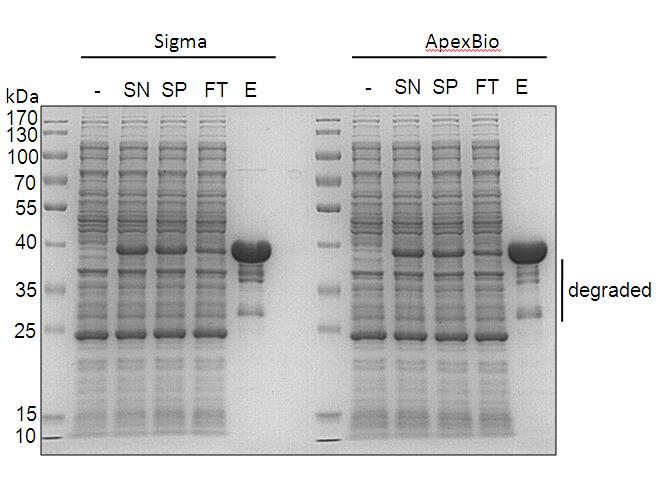
These mutations induce the gene auto-activation in 10–40% of adenocarcinomas, triggering the EGFR-signaling pathway in the absence of ligand. That leads to an uncontrolled acceleration of cell proliferation, survival and anti-apoptotic signals (Couraud et al., 2012). The frequency of these mutations
-
As one of emerging high throughout
2024-09-18

As one of emerging high-throughout methods, metabolomics detects metabolites which are ultimate response of biological systems to environmental changes [14]. Metabolomics uncovers metabolic alteration at the systems level. Comparison of global metabolic profiling reflects some unidentified biologica
-
Since the first studies of betaine aldehyde oxidation in rat
2024-09-18
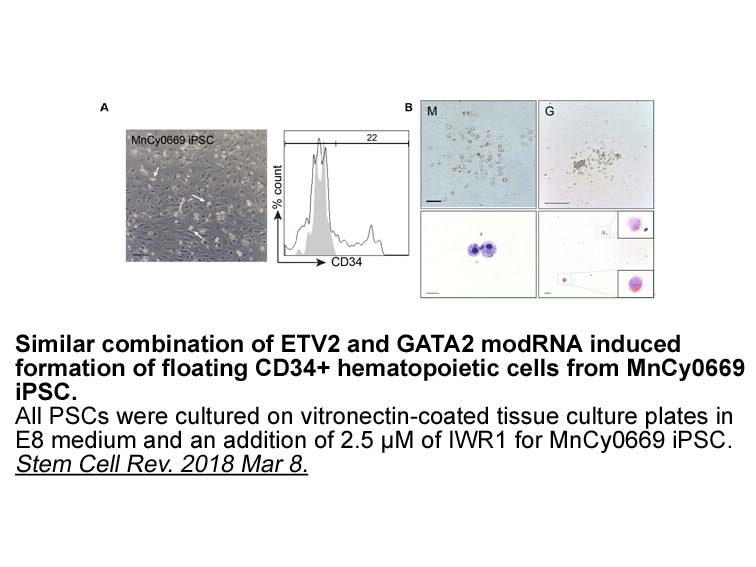
Since the first studies of betaine aldehyde oxidation in rats [13], the participation of betaine in the detoxification of homocysteine has well described, considering the activity of other AZD1080 as betaine homocysteine methyltransferase and methionine synthase. But, there is a lack of attention w
-
Young et al described the role
2024-09-18
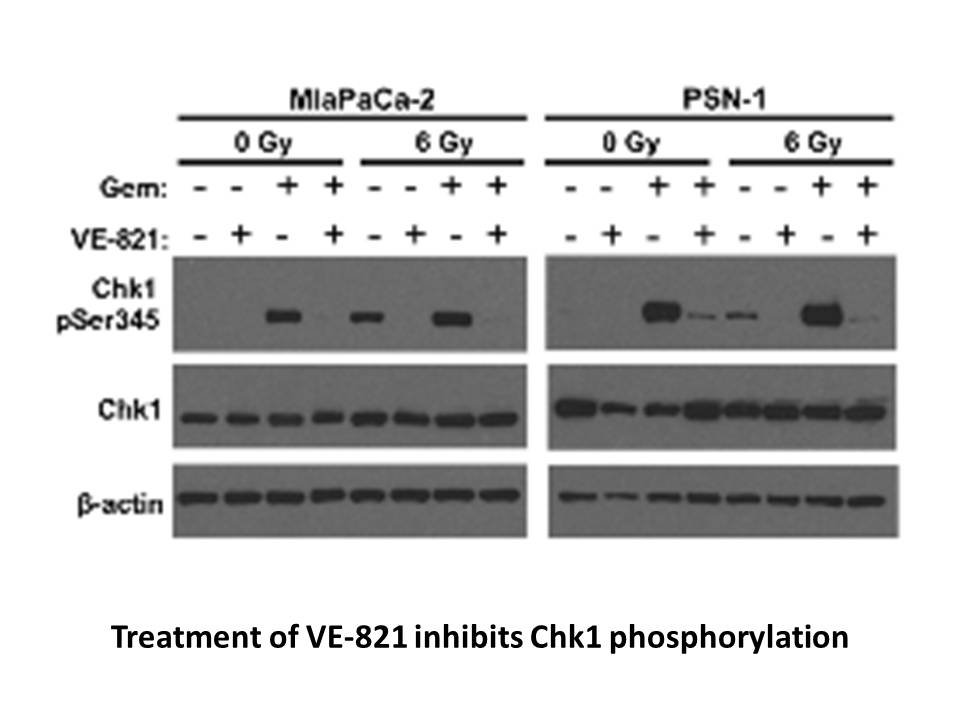
Young et al. [40] described the role of adenine monophosphate-activated protein kinase (AMPK) in the translocation of GLUT4 in the heart. The AMPK is activated during muscle contraction [74] by converting AMP to ATP. The adenosine analog, 5-aminoimidazole-4-carboxamide ribonucleotide (AICAR), is a c
-
Darifenacin HBr sale Medium spiny neurons MSNs in the striat
2024-09-18
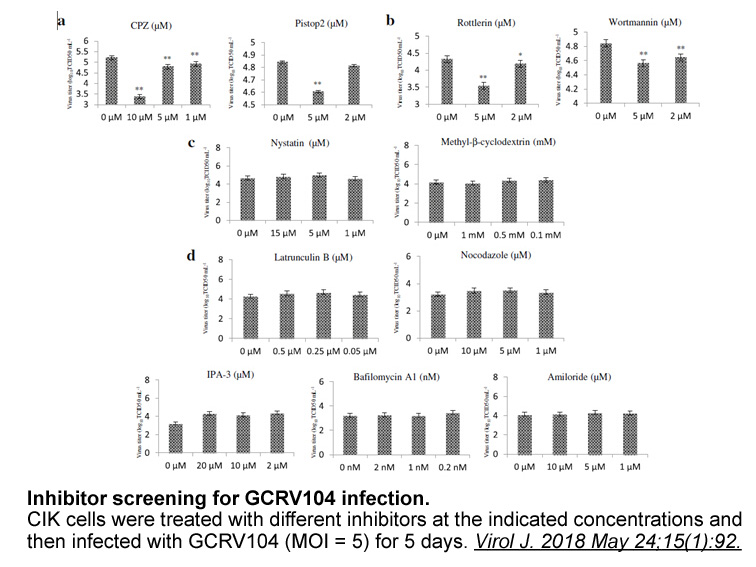
Medium spiny neurons (MSNs) in the striatum start from a deeply hyperpolarized resting membrane potential, slowly depolarize and show a delayed start of firing during a current injection (Kawaguchi, 1993, Nisenbaum and Wilson, 1995, Planert et al., 2013). The firing pattern during the current inject
-
br Acknowledgements This work was supported
2024-09-18
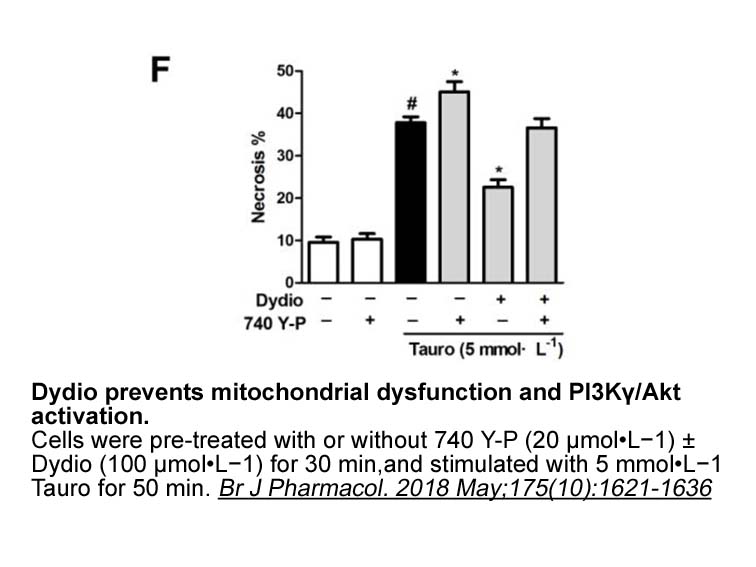
Acknowledgements This work was supported by grants from the Program for Changjiang Scholars and Innovative Research Team in University (IRT_14R28), the National Basic Research Program of China (973) (Grant No.: 2013CB733602), the Major Research Plan of the National Natural Science Foundation of C
-
br Conclusions The following are the supplementary data
2024-09-18
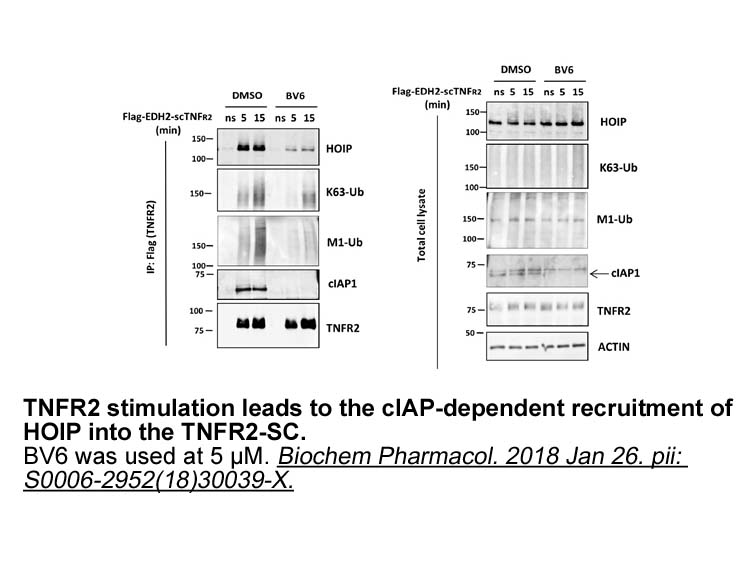
Conclusions The following are the supplementary data related to this article. Author contributions Conflict of interest Funding sources This work was supported by the Canadian Institutes of Health Research [grant: MOP-79470]. Introduction Sperm cells undergo a number of physical and
-
Steroidal CYP inhibitors can further be classified based on
2024-09-18
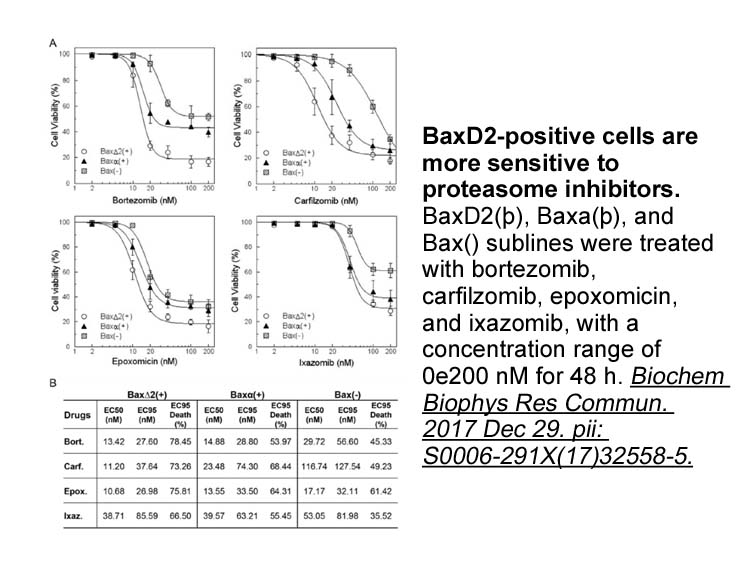
Steroidal CYP17 inhibitors can further be classified based on their mode of action, namely as mechanism-based inhibitors and type I and type II competitive inhibitors [129]. Recent studies investigated other biological targets than CYP17, and some new compounds have shown interesting dual activity a
-
The diagnosis of ICP is currently based on the presence
2024-09-18
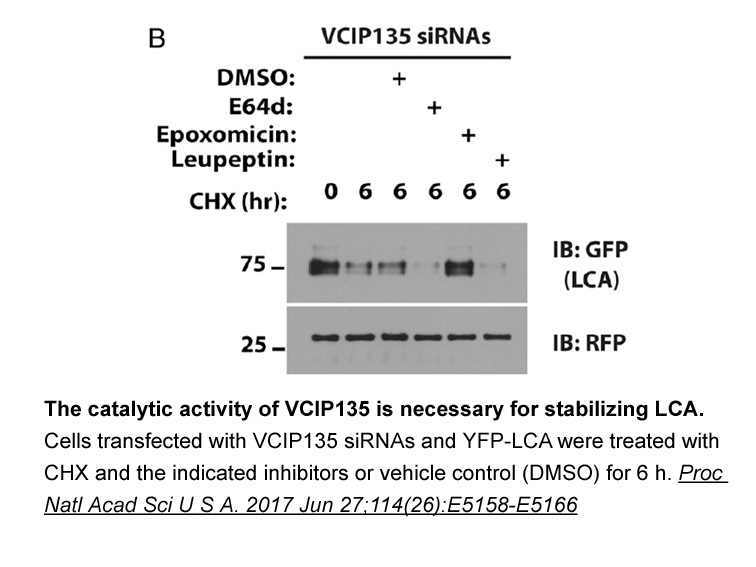
The diagnosis of ICP is currently based on the presence of pruritus, raised fasting serum TBS levels above 10μmol/L, and/or elevated serum transaminases (in the absence of diseases that cause cholestasis or pruritus) as well as spontaneous relief of signs and symptoms within four to six weeks after
-
The link between HPV infection and neoplasia has been
2024-09-18
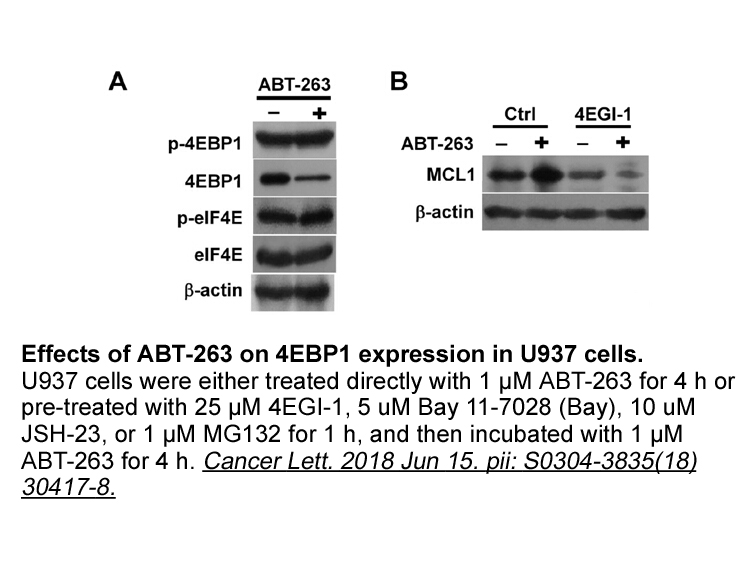
The link between HPV infection and neoplasia has been well established. HPV encodes two oncogenes (E6 and E7) that drive ONC201 sale progression by controlling the functions of tumor suppressor proteins p53 and Rb [7]. HPV is associated with more than 99% of cervical CESC cases [8]. CESC remains a
-
Evidences have suggested that impairment
2024-09-18
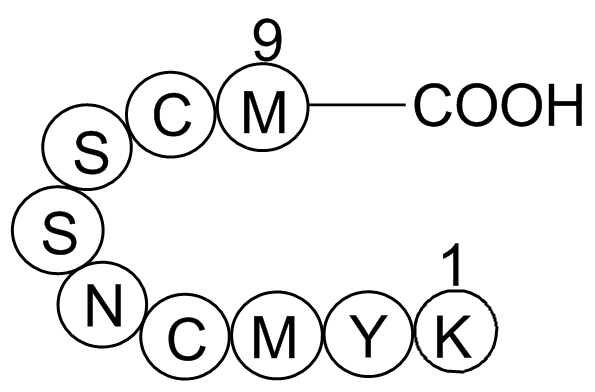
Evidences have suggested that impairment of CK activity contributes to inhibition of Na+, K+-ATPase and H+-ATPase activities during infectious diseases, since these ATPases are dependent of ATP, as observed by Baldissera et al. [31] in fish experimentally infected by Aeromonas caviae. We observed th
-
Org 25543 australia A high throughput screening campaign led
2024-09-18
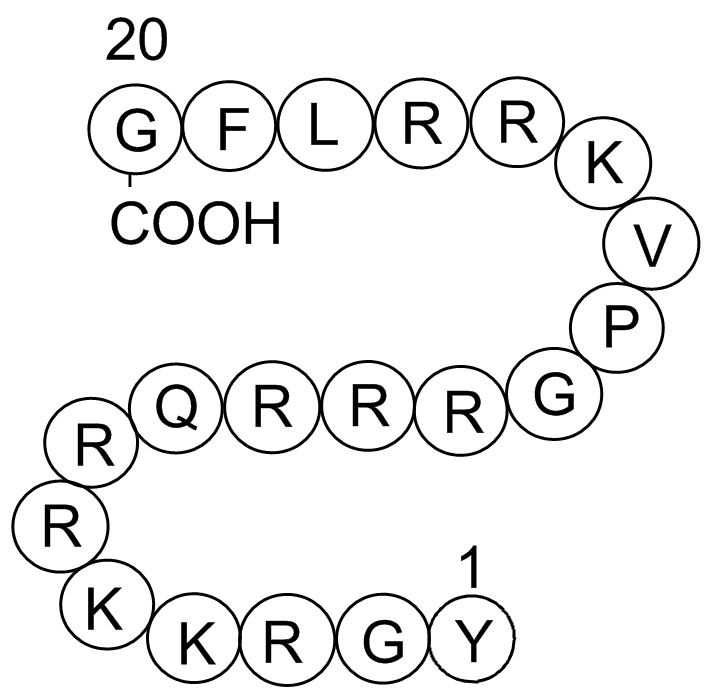
A high-throughput screening campaign led to the discovery of the first series of both potent and selective ATR kinase inhibitors by Vertex Pharmaceuticals (Charrier et al., 2011). One of these compounds, VE-821, was shown to be a potent ATP-competitive inhibitor of ATR with minimal cross-reactivity
-
br Experimental Procedures Additional information can be
2024-09-18
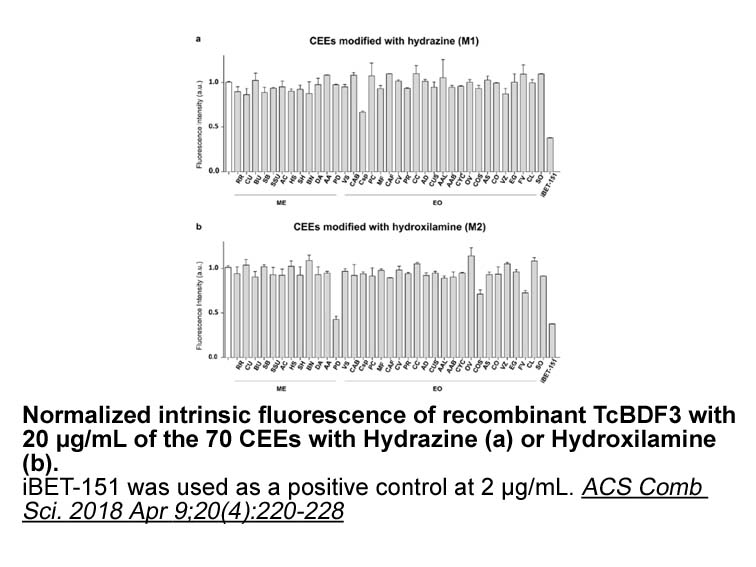
Experimental Procedures Additional information can be found in Supplemental Experimental Procedures. Author Contributions Acknowledgments We thank all members of Lab of Health Chemistry for helpful discussions. This work was supported by Grant-in-Aid for Scientific Research (KAKENHI) from
-
78416 Available data thus indicate that there are at least t
2024-09-14
Available data thus indicate that there are at least two ways that HMGA proteins can induce localized changes in the chromatin structure of inducible gene promoters, both of which involve positioned nucleosomes that must be “remodeled” before gene transcription can occur. The first mechanism is exem
8147 records 119/544 page Previous Next First page 上5页 116117118119120 下5页 Last page