Archives
- 2026-05
- 2026-04
- 2026-03
- 2026-02
- 2026-01
- 2025-12
- 2025-11
- 2025-10
- 2025-09
- 2025-03
- 2025-02
- 2025-01
- 2024-12
- 2024-11
- 2024-10
- 2024-09
- 2024-08
- 2024-07
- 2024-06
- 2024-05
- 2024-04
- 2024-03
- 2024-02
- 2024-01
- 2023-12
- 2023-11
- 2023-10
- 2023-09
- 2023-08
- 2023-07
- 2023-06
- 2023-05
- 2023-04
- 2023-03
- 2023-02
- 2023-01
- 2022-12
- 2022-11
- 2022-10
- 2022-09
- 2022-08
- 2022-07
- 2022-06
- 2022-05
- 2022-04
- 2022-03
- 2022-02
- 2022-01
- 2021-12
- 2021-11
- 2021-10
- 2021-09
- 2021-08
- 2021-07
- 2021-06
- 2021-05
- 2021-04
- 2021-03
- 2021-02
- 2021-01
- 2020-12
- 2020-11
- 2020-10
- 2020-09
- 2020-08
- 2020-07
- 2020-06
- 2020-05
- 2020-04
- 2020-03
- 2020-02
- 2020-01
- 2019-12
- 2019-11
- 2019-10
- 2019-09
- 2019-08
- 2019-07
- 2019-06
- 2019-05
- 2019-04
- 2018-07
-
br Resection of DNA ends The highly conserved MRN MRX
2025-01-20
Resection of DNA ends The highly conserved MRN/MRX complex (Mre11-Rad50-Nbs1 in metazoan; Mre11-Rad50-Xrs2 in yeast) and the Ku70/Ku80 heterodimer (hereafter referred to as Ku) are the first protein complexes to be recruited at DSBs [6]. The presence of Ku and MRN/MRX mediates the recruitment of
-
entacapone Receptor Subtypes and Their Function Critical
2025-01-20
Receptor Subtypes and Their Function – Critical Appraisal Largely unselective ligands of the benzodiazepine binding site, such as diazepam, are known to elicit a wide range of in vivo effects including hypnosis, sedation, anxiolysis, and muscle relaxation. Genetically modified mice were introduced
-
Based on the results of
2025-01-20
Based on the results of studies done to-date, there are three characteristics that make a letrozole-based protocol attractive for use in cattle: 1) it is steroid-free, 2) it is cost-effective and requires a shorter time and fewer animal handlings than conventional methods (Table 1), and 3) it may ha
-
Apelin is a bioactive peptide and endogenous ligand for the
2025-01-20
Apelin is a bioactive peptide and endogenous ligand for the APJ receptor (APLNR), a member of the G protein coupled receptor family that shares a similar sequence as the angiotensin type-1 receptor (AT1) [5]. Early studies demonstrated that the apelin/APLNR receptor axis plays a significant role in
-
br Obstructing SNARE zippering Sharma et al
2025-01-20
Obstructing SNARE “zippering” Sharma et al. demonstrated for the first time that in the postmortem AD brains, the level of SNARE complex formation, which is necessary for driving synaptic vesicle fusion at the presynaptic active zone, is significantly reduced [123]. In the absence of changes in e
-
The molecular mechanisms that mediate the plasticity of the
2025-01-20
The molecular mechanisms that mediate the plasticity of the NMJ are not well understood. PGC-1α is a master regulator of the NMJ gene expression program 23, 24, and thus AMPK might indirectly regulate the NMJ via its broad influence on the coactivator. Cerveró et al.[6] recently provided more direct
-
Another issue is that the
2025-01-20
Another issue is that the vast majority of data from PET and CSF are from selected participants recruited through tertiary care dementia centers [176]. It is widely recognized that clinic-based participants differ from community-based studies, for example, the amount, type, and distribution of neuro
-
It was recently shown that AHR and HIF cooperate to
2025-01-20

It was recently shown that AHR and HIF-1α cooperate to support the metabolism of Tr1 Tenatoprazole [6]. Interestingly, AHR and HIF-1α act sequentially to orchestrate the metabolic remodeling of lymphocytes. While HIF-1α regulates the early metabolic reprogramming of Tr1 cells, AHR takes over at lat
-
Human testicular peritubular cells HTPCs are also the only h
2025-01-20
Human testicular peritubular 81 5 (HTPCs) are also the only human testicular cell type that can be isolated, cultured and studied in vitro (Albrecht et al., 2006, Mayerhofer, 2013). Results from recent studies indicate that their roles go beyond sperm transport and include immunological functions.
-
br Adiponectin receptors in colorectal cancer development AP
2025-01-20
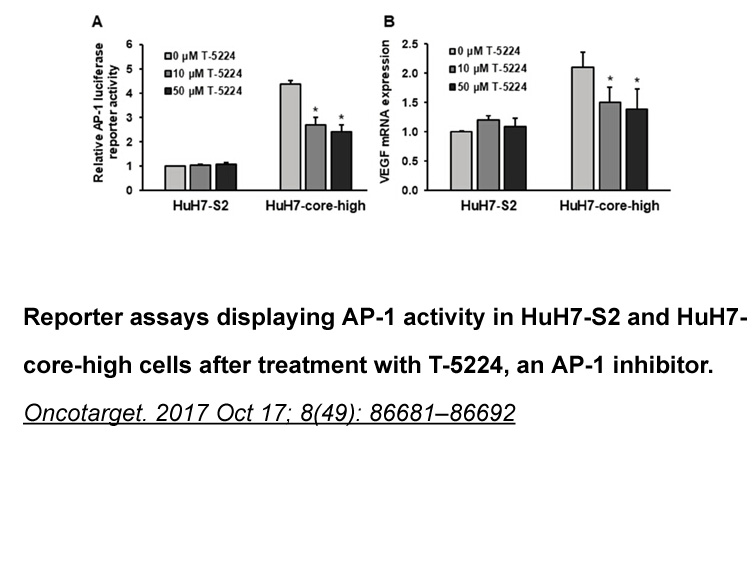
Adiponectin receptors in colorectal cancer development APN receptors expressed in CRC tissue may mediate its effects on cell expansion and cell death (Byeon et al., 2010). It was observed that the expression of AdipoR1 and 2 is higher in CRC tissue than in counterpart healthy tissues (Williams et
-
br Introduction Clinical manifestations of Alzheimer
2025-01-20
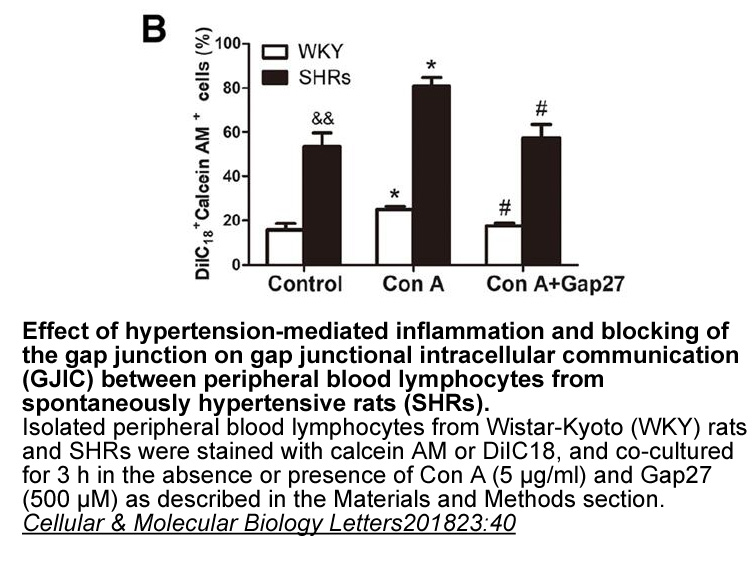
Introduction Clinical manifestations of Alzheimer's disease (AD) are mainly characterized by progressive intellectual deterioration, memory impairment, cognitive impairment, and psychiatric symptoms. The pathogenesis of AD remains unclear, mainly containing genetic factors, neurotransmitter disor
-
br Acknowledgements This work was supported by the National
2025-01-18
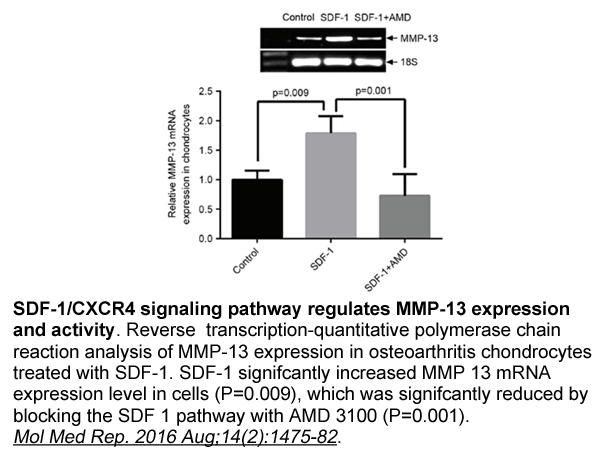
Acknowledgements This work was supported by the National Key Technology Research and Development Program (2012BAD19B01) and General Financial Grant from the China Postdoctoral Science Foundation (2015M581754). Introduction Cough is one of the most important defensive reflex brought into actio
-
br lipoxygenase pathway in brain aging and alzheimer s disea
2025-01-18
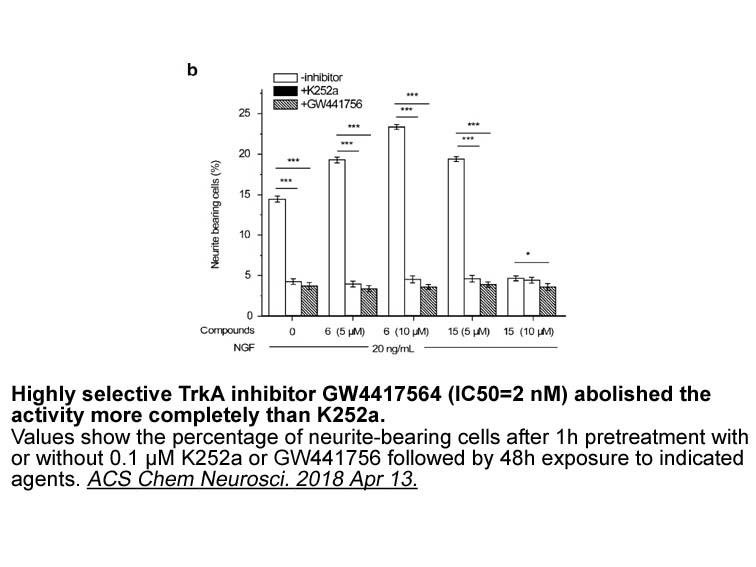
5-lipoxygenase pathway in brucine aging and alzheimer’s disease 5LO is found throughout the central nervous system, in both neuron and glia cells (Farias et al., 2007). However, its expression levels are highest in the cortex and hippocampus areas, two regions that are particularly vulnerable to
-
LPA binds to six specific cell surface GPCR receptors The
2025-01-18

LPA binds to six specific cell surface GPCR receptors. The receptors LPA1 (lysophosphatidic receptor 1, formerly, Edg2), LPA2 (Edg4) and LPA3 (Edg7) belong to the endothelial differentiation gene family (EDG) and share sequence homology (50–60% amino hexokinase inhibition homology) An et al., 1997,
-
br Autophagy in the central nervous
2025-01-18
Autophagy in the central nervous system The autophagic process appears to be very important for the cells of the central nervous system, as it allows to maintain the functional integrity of the nervous tissue. Indeed macroautophagy is involved in the regulation of homeostasis of the CNS, playing
15924 records 44/1062 page Previous Next First page 上5页 4142434445 下5页 Last page